Understanding Seer Ratings For Ac Maintenance
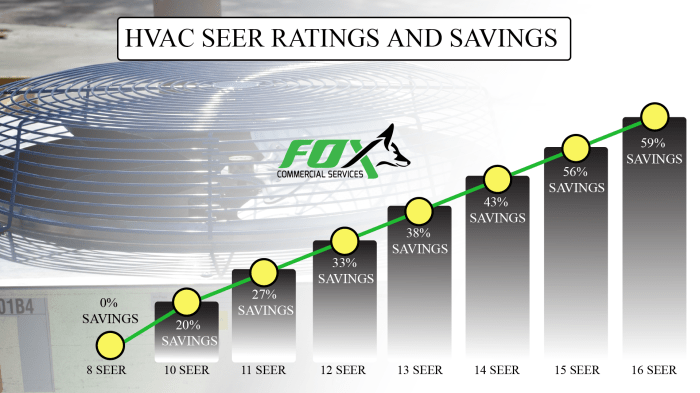
Understanding SEER ratings for AC maintenance sheds light on the critical aspects of energy efficiency and cost-effectiveness in air conditioning units, providing valuable insights for homeowners looking to optimize their systems.
In the following paragraphs, we will delve into the significance of SEER ratings, factors influencing them, tips for maintaining efficiency, and much more.
SEER Ratings Overview: Understanding SEER Ratings For AC Maintenance
SEER (Seasonal Energy Efficiency Ratio) ratings are a measure of the energy efficiency of air conditioning units. The higher the SEER rating, the more energy efficient the unit is, resulting in lower energy consumption and utility costs. SEER ratings help consumers compare the efficiency of different AC units and make informed decisions based on their energy-saving potential.
Examples of Different SEER Ratings
SEER ratings typically range from 13 to 25, with higher ratings indicating greater efficiency. For example, a unit with a SEER rating of 13 is considered to be the minimum efficiency standard, while a unit with a SEER rating of 25 is considered to be highly efficient. Choosing a unit with a higher SEER rating may require a larger upfront investment but can lead to significant long-term savings on energy bills.
Implications on Energy Efficiency
- Units with higher SEER ratings consume less energy to cool the same space compared to units with lower ratings.
- Higher SEER ratings contribute to reduced greenhouse gas emissions and environmental impact.
- Efficient units with higher SEER ratings can help homeowners qualify for energy efficiency rebates and incentives.
Impact on AC Maintenance Costs
SEER ratings can also impact AC maintenance costs. While units with higher SEER ratings are more energy efficient, they may require specialized maintenance and parts which can be more expensive. However, the overall savings on energy bills can offset these maintenance costs in the long run.
Importance of Understanding SEER Ratings
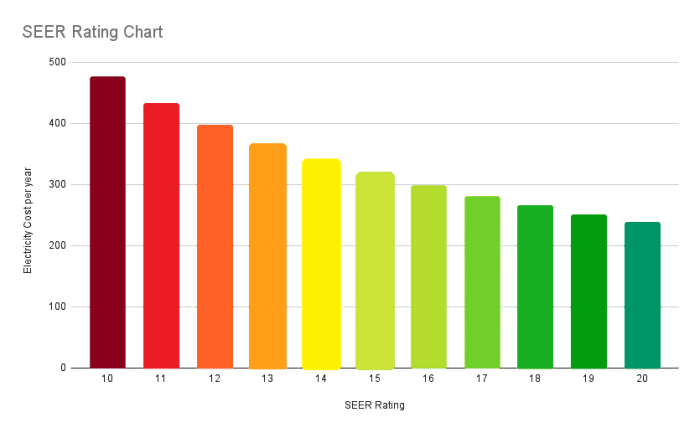
Understanding SEER ratings is crucial for homeowners as it provides valuable information about the energy efficiency of their air conditioning units. By knowing the SEER rating of an AC system, homeowners can make informed decisions regarding maintenance, repairs, and even upgrades to more energy-efficient models. This knowledge ultimately helps in optimizing the performance of the AC unit and maximizing energy savings in the long run.
Relationship Between SEER Ratings and Long-Term Savings
The SEER rating of an air conditioner directly impacts its energy efficiency, with higher SEER ratings indicating greater efficiency. This means that AC units with higher SEER ratings consume less energy to provide the same level of cooling as units with lower SEER ratings. By opting for a high SEER-rated AC unit, homeowners can significantly reduce their energy consumption and, consequently, lower their monthly utility bills. Over time, the energy savings accrued from using a high SEER-rated AC unit can offset the initial investment cost, making it a cost-effective choice in the long term.
Factors Affecting SEER Ratings
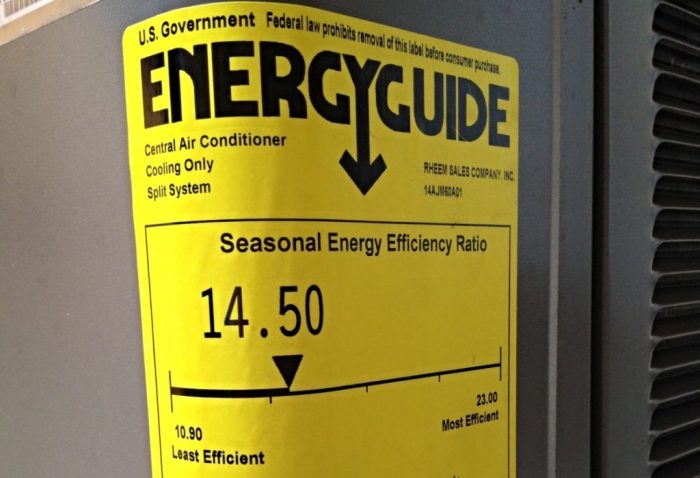
When it comes to the Seasonal Energy Efficiency Ratio (SEER) of an air conditioning unit, several factors play a crucial role in determining its efficiency and overall performance. Understanding these key factors can help homeowners make informed decisions when it comes to AC maintenance and installation.
Impact of AC Unit Size on SEER Ratings
The size of an air conditioning unit has a significant impact on its SEER rating. An oversized AC unit will cycle on and off more frequently, leading to increased energy consumption and lower efficiency. On the other hand, an undersized unit will struggle to cool the space efficiently, also resulting in poor SEER ratings. It is essential to choose the right-sized AC unit for your home to ensure optimal performance and energy efficiency.
Role of Proper Installation and Maintenance, Understanding SEER ratings for AC maintenance
Proper installation and regular maintenance are critical in maintaining the SEER efficiency of an air conditioning unit. A poorly installed AC system can lead to duct leaks, improper airflow, and other issues that can impact the unit’s efficiency and SEER rating. Regular maintenance, such as cleaning or replacing filters, checking refrigerant levels, and inspecting ductwork, can help ensure that the AC unit operates at its peak efficiency, ultimately improving its SEER rating.
Tips for Maintaining SEER Efficiency
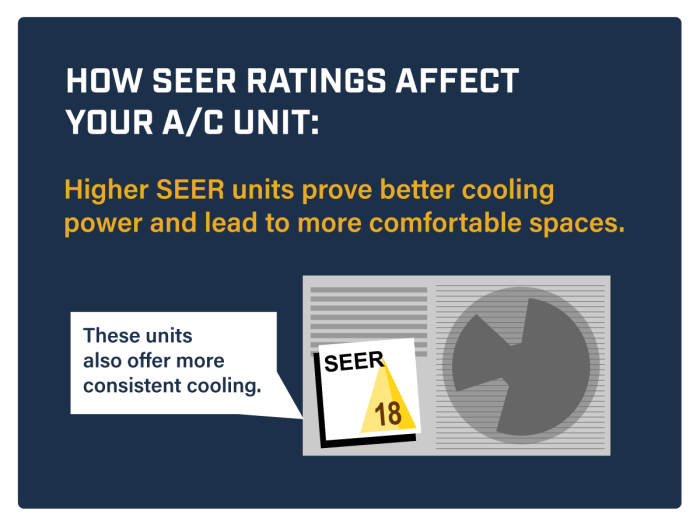
Regular maintenance is crucial for preserving the SEER efficiency of your AC unit. By following these tips, homeowners can ensure that their system continues to operate at peak performance, saving energy and reducing utility costs over time.
Regularly Change Air Filters
- Dirty air filters restrict airflow, causing the system to work harder and reducing efficiency.
- Replace filters every 1-3 months, or as recommended by the manufacturer.
Keep the Outdoor Unit Clean
- Debris like leaves, dirt, and grass clippings can block airflow and hinder the unit’s efficiency.
- Regularly clean the outdoor unit with a garden hose to remove any build-up.
Schedule Annual Professional Maintenance
- Regular maintenance by a professional HVAC technician can identify and address issues before they impact efficiency.
- Annual tune-ups can help ensure that your system is running smoothly and efficiently.
Check and Seal Ductwork
- Leaky ducts can lead to energy loss and reduced efficiency in your AC system.
- Inspect ductwork for leaks and seal them with duct mastic or foil tape to improve efficiency.
Programmable Thermostat Usage
- Using a programmable thermostat can help optimize your cooling schedule to maximize efficiency.
- Set temperatures higher when away from home and lower when you’re present to save energy.
Conclusive Thoughts
In conclusion, grasping the intricacies of SEER ratings can lead to smarter decisions regarding AC maintenance, ultimately resulting in enhanced performance and reduced expenses.
Preparing your AC for summer is crucial to ensure it functions efficiently during the hot months. Regular maintenance can help prevent breakdowns and extend the lifespan of your unit. Check out this guide for tips on preparing your AC for the summer season.
Benefits of regular AC maintenance include improved air quality, lower energy bills, and fewer repairs. By scheduling regular maintenance, you can ensure that your AC unit operates at peak performance. Learn more about the benefits of regular AC maintenance to keep your unit running smoothly.
DIY air conditioner maintenance can save you time and money. By following a step-by-step guide , you can clean filters, check for leaks, and ensure proper airflow. Regular maintenance is key to keeping your AC unit in top condition.