Signs That Your Ac Needs Maintenance
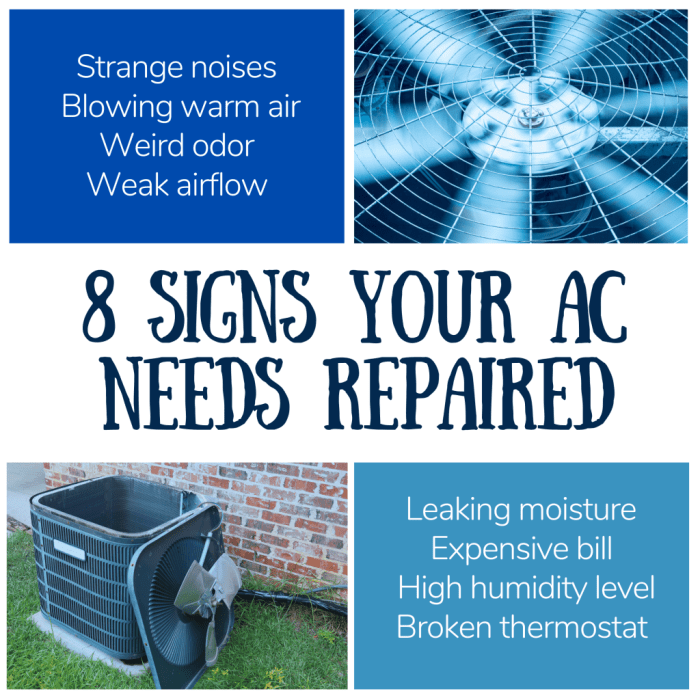
Signs that your AC needs maintenance: Common indicators and performance changes. Are you aware of the subtle signs that your AC unit might be in need of maintenance? Let’s delve into the key signals that shouldn’t be ignored, from unusual sounds to increased energy bills.
In this comprehensive guide, we’ll explore the importance of regular AC maintenance, DIY tips for homeowners, and when it’s time to call a professional for maintenance services. Stay tuned to ensure your AC unit stays in top condition!
Signs that your AC needs maintenance

If you notice any of the following signs, it may be time to schedule maintenance for your AC unit to ensure optimal performance and efficiency.
Changes in Performance
- Decreased cooling efficiency
- Inconsistent temperature control
- Poor airflow
Unusual Sounds or Odors
- Rattling, banging, or squealing noises
- Musty or foul odors when the AC is running
Impact of Increased Energy Bills
- Higher than usual energy bills without a corresponding increase in usage
- Dirty or clogged filters can lead to increased energy consumption
Importance of regular AC maintenance

Regular maintenance of your AC unit is crucial for several reasons that directly impact its performance, longevity, and efficiency. Neglecting routine maintenance can lead to costly repairs, poor indoor air quality, and increased energy consumption.
Longevity of your AC unit
Regular maintenance helps extend the lifespan of your AC unit by ensuring that all components are functioning properly. By addressing minor issues early on, you can prevent major breakdowns that may require expensive repairs or even premature replacement of the unit.
Prevention of costly repairs
Routine maintenance allows HVAC professionals to identify and fix any potential problems before they escalate into more significant issues. By addressing issues proactively, you can avoid costly repairs that may occur if problems are left unattended for an extended period.
Optimal indoor air quality
Regular maintenance includes cleaning and replacing filters, which is essential for maintaining optimal indoor air quality. Dirty filters can lead to poor air circulation, allowing dust, allergens, and other contaminants to circulate in your home. By keeping your AC unit well-maintained, you can ensure that the air you breathe is clean and healthy.
Improved energy efficiency
A well-maintained AC unit operates more efficiently, using less energy to cool your home effectively. Dirty filters, clogged coils, and other issues can cause your AC unit to work harder than necessary, leading to increased energy consumption and higher utility bills. By scheduling regular maintenance, you can improve the energy efficiency of your AC unit and save money on your cooling costs.
DIY maintenance tips for AC units: Signs That Your AC Needs Maintenance

Regular maintenance of your AC unit is essential to ensure optimal performance and longevity. Here are some basic maintenance tasks that homeowners can do themselves to keep their AC running smoothly.
Cleaning or replacing air filters
Air filters in your AC unit play a crucial role in maintaining indoor air quality and system efficiency. Clogged filters can restrict airflow, making your AC work harder and consume more energy. It is recommended to clean or replace air filters every 1-3 months, depending on usage.
- Locate the air filter in your AC unit, usually found behind the return air grille or inside the air handler.
- Switch off the AC unit before removing the filter to prevent any damage.
- If it’s a reusable filter, vacuum or wash it with mild detergent and water. Let it dry completely before reinstalling.
- For disposable filters, replace them with a new one of the same size and type.
- Regularly checking and maintaining air filters can improve indoor air quality, extend the lifespan of your AC unit, and reduce energy consumption.
Keeping the outdoor unit clean
The outdoor unit of your AC system, known as the condenser unit, should be kept clean and free from debris to ensure proper airflow and heat transfer.
- Inspect the outdoor unit regularly for any debris such as leaves, dirt, or grass clippings that may block the airflow.
- Clean the area around the unit and remove any obstructions to allow for adequate ventilation.
- Gently hose down the exterior of the unit to remove dirt and dust buildup on the coils and fins.
- Maintaining a clean outdoor unit can improve the overall efficiency of your AC system and prevent potential breakdowns.
Checking and cleaning evaporator and condenser coils
The evaporator and condenser coils in your AC unit are responsible for removing heat from the air. Over time, these coils can accumulate dirt and debris, hindering their performance.
- Turn off the power to the AC unit before inspecting or cleaning the coils to prevent any accidents.
- Use a soft brush or vacuum cleaner with a soft brush attachment to gently clean the coils and remove any dirt or debris.
- For stubborn dirt buildup, you can use a commercial coil cleaner following the manufacturer’s instructions.
- Clean coils ensure efficient heat transfer and help your AC unit operate smoothly and effectively.
When to call a professional for AC maintenance
It’s essential to know when to seek professional help for AC maintenance to ensure your unit functions optimally. While some tasks can be handled with DIY maintenance, certain situations require the expertise of an HVAC technician.
Situations requiring professional AC maintenance, Signs that your AC needs maintenance
- Complex Repairs: If your AC unit requires extensive repairs or part replacements, it’s best to call a professional. Trying to fix complex issues without the necessary knowledge and tools can lead to further damage.
- Refrigerant Leaks: Handling refrigerant leaks is hazardous and requires specialized training. A professional can safely repair the leak, recharge the system, and ensure it operates efficiently.
- Electrical Problems: Issues with the electrical components of your AC unit should be addressed by a professional to prevent safety hazards and ensure proper functioning.
Benefits of professional tune-ups
- Uncover Hidden Issues: A professional inspection can reveal underlying problems that may go unnoticed during DIY maintenance. Addressing these issues promptly can prevent costly repairs in the future.
- Ensure Efficiency: Regular tune-ups by a professional can help your AC system operate efficiently, reducing energy consumption and extending the lifespan of the unit.
- Enhanced Performance: Professional maintenance can improve the overall performance of your AC unit, ensuring consistent cooling and optimal comfort in your home.
Indicators for scheduling a maintenance service
- Weak Airflow: If you notice weak or inconsistent airflow from your vents, it may indicate a problem with your AC system that requires professional attention.
- Strange Noises: Unusual noises such as grinding, squealing, or banging coming from your AC unit can be signs of underlying issues that a professional should inspect.
- Frequent Cycling: An AC unit that frequently turns on and off, known as short cycling, may indicate a problem that needs to be addressed by a professional technician.
Summary
From recognizing early warning signs to taking proactive measures, ensuring your AC unit receives timely maintenance is crucial for its longevity and optimal performance. Don’t wait until it’s too late—stay ahead of potential issues and enjoy a cool and comfortable indoor environment all year round.
In the world of programming, the term “Hello world!” is often used as the first program to introduce beginners to coding. This simple phrase serves as a starting point for learning various programming languages. If you want to explore more about the significance of “Hello world!” in programming, you can visit this informative Hello world! article.
Research has shown that the phrase “Hello world!” is commonly used as the first program created by beginners in programming. This tradition dates back to the early days of computing and serves as a simple introduction to coding. For more information on the origin and significance of “Hello world!”, you can visit Hello world!.