
How To Check Refrigerant Levels In Ac

As How to check refrigerant levels in AC takes center stage, this opening passage beckons readers with research style into a world crafted with good knowledge, ensuring a reading experience that is both absorbing and distinctly original.
Checking refrigerant levels in your AC is vital for its optimal performance. This guide will walk you through the process step by step, ensuring you can maintain your AC system effectively.
Importance of Checking Refrigerant Levels
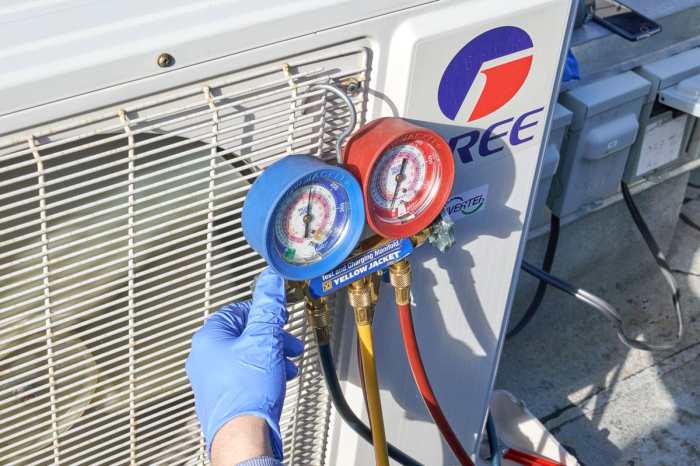
Regularly monitoring the refrigerant levels in an AC system is essential to ensure optimal performance and efficiency. Proper refrigerant levels are crucial for the system to function effectively and maintain a comfortable indoor environment.
When it comes to programming, the first thing every developer learns is the famous phrase “Hello world!”. This simple program is often used as an introduction to a new programming language. To understand more about the significance of this phrase in the coding world, you can read more about it here.
Consequences of Low or High Refrigerant Levels, How to check refrigerant levels in AC
Low refrigerant levels can lead to several issues such as:
- Decreased cooling capacity
- Inefficient operation
- Potential damage to the compressor
- Increased energy consumption
On the other hand, high refrigerant levels can also cause problems like:
- Poor cooling performance
- Potential damage to the compressor due to liquid refrigerant entering it
- Reduced dehumidification
Signs that Indicate the Need to Check Refrigerant Levels
Some common signs that may indicate low refrigerant levels include:
- Warm air blowing from the vents
- Inadequate cooling despite the AC running
- Hissing or bubbling sounds coming from the unit
- Frost or ice buildup on the evaporator coils
It is important to address any of these signs promptly by checking and adjusting the refrigerant levels to prevent further damage to the AC system.
In the world of programming, the phrase “Hello world!” is often used as a simple introductory example for beginners. This tradition dates back to the early days of computer programming. If you want to learn more about the significance of the “Hello world!” program, you can read about it here.
Tools Required for Checking Refrigerant Levels

To accurately check refrigerant levels in an AC system, several tools are necessary. These tools help in measuring, detecting leaks, and ensuring the proper functioning of the refrigerant system.
1. Refrigerant Gauges
Refrigerant gauges are essential for checking the pressure of the refrigerant in the AC system. They consist of two gauges – one for high pressure and one for low pressure. By connecting these gauges to the service ports on the AC unit, technicians can determine if the refrigerant levels are within the recommended range.
2. Refrigerant Leak Detector
A refrigerant leak detector is used to identify any leaks in the AC system. This tool helps technicians locate the source of leaks quickly and accurately, preventing further damage to the system. There are various types of leak detectors available, including electronic, ultrasonic, and dye-based detectors.
3. Thermometer
A thermometer is used to measure the temperature of the air coming out of the AC vents. By comparing this temperature with the recommended range, technicians can determine if the refrigerant levels are affecting the cooling capacity of the system.
4. Safety Glasses and Gloves
Safety glasses and gloves are essential for protecting technicians from any refrigerant leaks or spills. Refrigerants can be harmful if they come into contact with the skin or eyes, so it is crucial to use protective gear while working with them.
These tools can be obtained from HVAC supply stores, online retailers, or specialized tool shops. The cost of these tools can vary depending on the brand and quality, with refrigerant gauges typically ranging from $50 to $200, leak detectors from $100 to $500, thermometers from $10 to $50, and safety gear costing around $20 to $50. It is important to invest in high-quality tools to ensure accurate and reliable results when checking refrigerant levels in an AC system.
Steps to Check Refrigerant Levels: How To Check Refrigerant Levels In AC
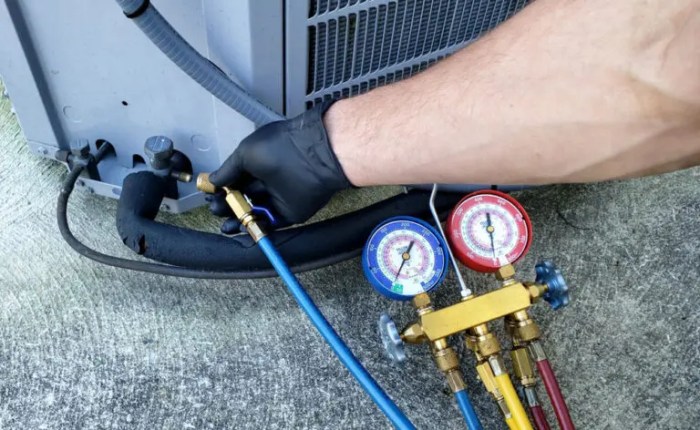
Checking the refrigerant levels in your AC is an essential maintenance task that helps ensure optimal performance and energy efficiency. Here is a step-by-step guide on how to check the refrigerant levels in an AC system.
Locating the Service Ports
To begin the process of checking the refrigerant levels in your AC, you first need to locate the service ports on the AC system. These service ports are typically located on the refrigerant lines near the condenser unit outside. They are usually labeled as high-pressure and low-pressure ports.
- Identify the two service ports: The high-pressure port is typically smaller and located on the liquid line, while the low-pressure port is larger and located on the suction line.
- Remove the port caps: Before connecting the gauges, make sure to remove the protective caps from the service ports to access the valves.
Connecting the Gauges to the Service Ports
Once you have located the service ports on the AC system, the next step is to connect the gauges to these ports to measure the refrigerant levels accurately.
- Attach the hoses: Connect the blue hose of the gauge set to the low-pressure service port and the red hose to the high-pressure service port.
- Open the valves: Slowly open the valves on the gauges to allow the refrigerant pressure to register on the gauges. Make sure to follow the manufacturer’s instructions for your specific gauge set.
- Read the gauges: Once the valves are open, observe the readings on the gauges. The low-pressure gauge should typically read between 30-40 psi, while the high-pressure gauge should read between 150-250 psi, depending on the ambient temperature.
Interpreting Refrigerant Readings

When checking the refrigerant levels in your AC system, it is crucial to interpret the pressure readings on the gauges correctly. These readings provide valuable information about the state of the refrigerant and the overall performance of the system.
Pressure Readings
- Low Pressure: If the low-pressure gauge shows a reading below the recommended level, it indicates a possible refrigerant leak or insufficient charge. This can lead to poor cooling performance and potential damage to the compressor.
- High Pressure: Conversely, a high-pressure reading on the gauge could signify an overcharged system or a blockage in the refrigerant lines. This can also result in reduced cooling efficiency and potential damage to components.
- Normal Range: Ideally, the pressure readings should fall within the manufacturer’s recommended range for optimal performance. Deviations from this range may require further investigation and adjustments.
It is essential to consult the manufacturer’s guidelines or a professional technician to ensure the refrigerant levels are within the appropriate range.
Interpretation and Action
- If the pressure readings indicate low refrigerant levels, it is advisable to locate and repair any leaks before recharging the system with the correct amount of refrigerant.
- On the other hand, high pressure readings may necessitate evacuating some refrigerant to bring the levels back to the recommended range.
- Regular monitoring of the pressure readings can help prevent major issues and ensure the efficient operation of your AC system.
Final Thoughts
Understanding how to check refrigerant levels in your AC system is crucial for keeping it running smoothly. By following the steps Artikeld in this guide, you can ensure your AC performs efficiently and effectively.
Also Read: Importance Of Regular Ac Tune-Ups