Best Air Conditioner Maintenance Tips
Best air conditioner maintenance tips: When it comes to keeping your air conditioner in top shape, following these maintenance tips is essential for optimal performance and efficiency. Regular upkeep not only extends the lifespan of your AC unit but also helps you avoid costly repairs down the line. Let’s delve into the best practices for maintaining your air conditioner to ensure it keeps you cool all year round.
Importance of Air Conditioner Maintenance
Regular maintenance of an air conditioner is vital for ensuring its longevity and efficiency. Neglecting maintenance can lead to a range of issues that can be costly to repair or even require a full replacement. Additionally, proper maintenance plays a crucial role in improving indoor air quality and reducing energy consumption.
Impact on Longevity and Efficiency
Proper maintenance, such as cleaning or replacing filters, checking refrigerant levels, and inspecting components, can help prevent breakdowns and extend the lifespan of the air conditioner. Without regular upkeep, the system may experience wear and tear, reducing its efficiency and increasing the risk of malfunctions.
Costly Repairs and Replacements
Failure to maintain an air conditioner can result in various problems, such as compressor failures, refrigerant leaks, or electrical issues. These issues can lead to expensive repairs or the need for a complete replacement of the unit, causing financial strain to the homeowner.
Impact on Indoor Air Quality and Energy Consumption
A well-maintained air conditioner ensures better indoor air quality by removing dust, pollen, and other allergens from the air. On the other hand, a neglected system may circulate contaminated air, leading to respiratory problems. Moreover, a properly maintained air conditioner operates more efficiently, consuming less energy and reducing utility bills.
Basic Maintenance Tasks

Regular maintenance is essential to ensure your air conditioner functions efficiently and effectively. Here are some basic maintenance tasks that you should perform regularly to keep your AC in top condition.
Cleaning or Replacing Filters, Best air conditioner maintenance tips
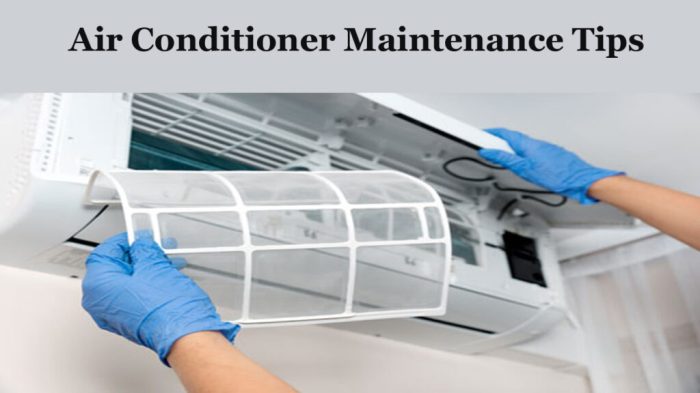
- Dirty filters can restrict airflow and reduce the cooling efficiency of your air conditioner. It is recommended to clean or replace filters every 1-3 months, depending on usage.
- Refer to the manufacturer’s guidelines on how to access and clean the filters. Typically, you can clean reusable filters with water or vacuum them, while disposable filters should be replaced.
Cleaning Coils and Fins
- Over time, the coils and fins of your air conditioner can accumulate dirt and dust, hindering heat transfer and reducing efficiency. Regular cleaning can improve cooling efficiency.
- To clean the coils, turn off the power to the unit, remove the access panel, and use a coil cleaning solution or a soft brush to gently clean the coils. Be careful not to damage the fins.
- The fins can be cleaned using a fin comb or a soft brush to straighten bent fins and remove debris. This helps ensure optimal airflow.
Clearing Debris Around the Outdoor Unit
- Debris such as leaves, dirt, and grass clippings can accumulate around the outdoor unit, obstructing airflow and reducing the efficiency of your air conditioner. Regularly clear the area around the unit to ensure optimal airflow.
- Use a brush or vacuum to remove debris from the fins and ensure there is at least 2 feet of clearance around the unit for proper ventilation.
Seasonal Maintenance Checklist
Regular maintenance of your air conditioner is crucial to ensure its optimal performance and longevity. Seasonal maintenance tasks play a significant role in keeping your AC unit running efficiently. Here is a checklist of essential seasonal maintenance tasks to help you maintain your air conditioner properly.
Checking Refrigerant Levels
- Inspect refrigerant levels to ensure they are at the recommended level. Low refrigerant levels can lead to poor cooling performance and increased energy consumption.
- If you notice a decrease in refrigerant levels, it may indicate a leak in the system that needs to be repaired by a professional HVAC technician.
Inspecting and Cleaning Evaporator and Condenser Coils
- Inspect the evaporator and condenser coils for any dirt, dust, or debris buildup. Clean the coils using a soft brush or vacuum to remove any obstructions that can hinder heat transfer.
- Ensure the coils are clean to allow proper airflow and heat exchange, which is essential for efficient cooling performance.
Scheduling Professional Tune-Ups
- It is recommended to schedule professional tune-ups before each cooling season to ensure your air conditioner is in top condition.
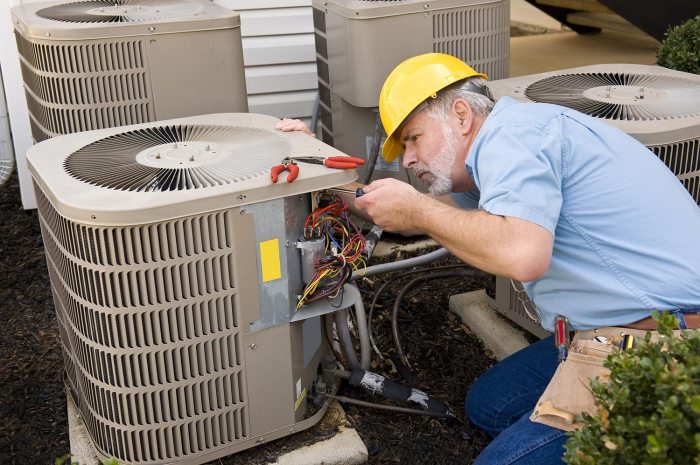
- A professional HVAC technician can inspect, clean, and tune-up your AC unit to optimize its performance, identify potential issues, and prevent breakdowns during the peak cooling season.
Troubleshooting Common Issues

When your air conditioner is not functioning properly, it can be frustrating and uncomfortable. Identifying common issues and knowing how to troubleshoot them can help you address the problem quickly and efficiently.
Inadequate Cooling
If your air conditioner is not cooling your space as it should, there could be several reasons behind it. One common cause is a dirty air filter, which restricts airflow and reduces cooling efficiency. To troubleshoot this issue, check and replace the air filter if necessary. Another possible cause could be a refrigerant leak, in which case you should contact a professional HVAC technician for repair.
Strange Noises
Strange noises coming from your air conditioner can be a sign of underlying issues. Rattling or banging noises may indicate loose or broken parts within the unit. If you hear hissing or whistling sounds, it could be a refrigerant leak. To troubleshoot these issues, turn off the air conditioner and inspect the unit for any visible damage or loose components. If you are unable to identify the source of the noise, it is best to seek professional help.
When to Seek Professional Help
While basic maintenance tasks can help prevent common issues with your air conditioner, there are times when professional help is necessary. If you encounter complex problems such as electrical issues, refrigerant leaks, or compressor failure, it is important to contact a licensed HVAC technician. Attempting to repair these issues yourself can be dangerous and may cause further damage to your unit.
Epilogue: Best Air Conditioner Maintenance Tips

In conclusion, adhering to these air conditioner maintenance tips will not only prolong the life of your unit but also enhance its performance and efficiency. By staying proactive with regular maintenance, you can enjoy a comfortable indoor environment while keeping energy costs in check. Make sure to incorporate these tips into your routine to ensure your air conditioner runs smoothly for years to come.
The phrase “Hello world!” is commonly used in the programming world as a simple introductory message to test a new system. To learn more about the origins and significance of this phrase, you can visit this Hello world! article.
In the world of programming, the phrase “Hello world!” is often used as the first line of code to introduce beginners to a new language. This tradition dates back to the 1970s when it was first used in a book by Brian Kernighan.
To learn more about the origin and significance of this iconic phrase, you can visit Hello world!.